

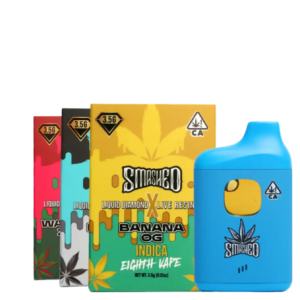
Smashed Liquid Diamond × Live Resin Disposable Vape: Educational and Regulatory Overview
Introduction
The phrase “Liquid Diamond × Live Resin Disposable Vape” describes a modern vaporization product format that combines two distinct extract types: crystallized cannabinoid isolates (“liquid diamonds”) and live resin extracts. While these products are widely discussed in consumer markets, they are also relevant to extraction science, formulation research, aerosol studies, and regulatory compliance analysis.
This article presents a neutral, educational overview of this product category, focusing on chemical composition, formulation science, safety considerations, and legal context, without promoting use or sale.
Understanding the Components
H2: What Are “Liquid Diamonds” (Scientific Context)
In technical terms, liquid diamonds refer to high-purity crystallized cannabinoids, most commonly cannabinoid acids such as THCa or CBDa, suspended in a terpene-rich liquid phase to maintain flow characteristics.
Key properties:
- High analyte purity (often >90% in laboratory contexts)
- Crystalline lattice structure
- Requires controlled temperature to remain semi-fluid
- Sensitive to heat and light
These materials are studied in crystallization chemistry, stability testing, and aerosol formulation research.
H2: What Is Live Resin (Analytical Perspective)
Live resin is produced from fresh or flash-frozen plant material, preserving volatile compounds such as terpenes and flavonoids. From a research standpoint, live resin is significant due to:
- Higher terpene retention
- Complex chemical profiles
- Increased variability between batches
- Sensitivity to oxidation and heat
Live resin is frequently analyzed in terpene stability studies and comparative extraction research.
Formulation Science: Combining Liquid Diamonds and Live Resin
H3: Chemical Compatibility
Combining crystalline cannabinoids with live resin presents formulation challenges, including:
- Maintaining homogeneity
- Preventing recrystallization
- Managing viscosity for device compatibility
- Preserving volatile terpene compounds
Researchers examine phase behavior, solubility dynamics, and thermal degradation thresholds when studying these blends.
H3: Viscosity and Heating Behavior
High-viscosity blends require careful consideration of:
- Coil temperature limits
- Power delivery stability
- Wicking efficiency
- Aerosol particle size distribution
These factors are commonly evaluated in vaporization technology research and inhalation toxicology modeling.
Disposable Vape Hardware (Engineering Overview)
Disposable vape devices used with high-density extracts must be engineered to:
- Deliver consistent heat
- Avoid heavy-metal leaching
- Prevent overheating or thermal decomposition
- Maintain sealed containment
From an academic and regulatory perspective, these devices are studied for:
- Battery safety
- Emissions under stress testing
- Materials degradation
- Environmental impact of disposables
Safety and Risk Awareness
H2: General Safety Considerations (Non-Use Specific)
| Safety Area | Research Consideration |
|---|---|
| Thermal Degradation | High heat may produce secondary compounds |
| Aerosol Exposure | Particle size and chemical composition matter |
| Material Safety | Coil and housing materials must be inert |
| Storage Stability | Heat and light may alter chemical structure |
| Disposal | Batteries and cartridges pose environmental risks |
This information is presented for public health, laboratory, and regulatory research, not consumer guidance.
Regulatory and Legal Landscape
H2: Jurisdictional Variability
The legality of disposable vape products containing cannabinoid extracts depends on:
- Cannabinoid composition
- Source material (hemp vs. non-hemp)
- Concentration thresholds
- Device classification
| Region | Regulatory Approach | Governing Bodies |
|---|---|---|
| United States | Regulated at the federal and state levels | FDA, DEA, State Agencies |
| Canada | Strictly regulated under Cannabis Act | Health Canada |
| European Union | Varies by country; Novel Foods and drug laws apply | EFSA, National Authorities |
| UK | THC-restricted under Misuse of Drugs Act | Home Office |
| Asia-Pacific | Mostly prohibited or tightly restricted | National Drug Authorities |
Always consult current local law. Regulations change frequently.
Public Health and Research Interest
Academic and regulatory institutions examine these products to better understand:
- Long-term inhalation exposure
- Device failure risks
- Consumer harm patterns
- Environmental waste impact
Findings are used to inform:
- Policy decisions
- Product standards
- Emissions testing protocols
- Public safety advisories
Smashed Liquid Diamond Keywords (Educational & Professional )
Primary Keywords
- liquid diamond live resin research
- disposable vape formulation science
- cannabinoid crystallization studies
- aerosol emissions analysis
- vaporization technology research
Secondary Keywords
- terpene stability testing
- extract formulation chemistry
- vape hardware safety
- regulatory compliance for vape devices
- public health vapor studies
Conclusion
“Smashed Liquid Diamond × Live Resin Disposable Vape” products represent a complex intersection of chemistry, engineering, and regulation. While often framed as consumer items, they are increasingly relevant to academic research, regulatory evaluation, and public health monitoring.
Understanding these products through a scientific and regulatory lens supports safer standards, better policy decisions, and improved analytical methodologies—without promoting or endorsing use.




Reviews
There are no reviews yet.